
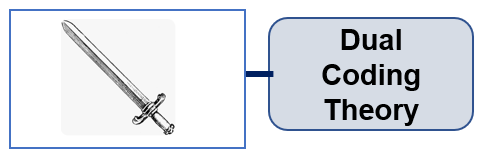
Having access to a varied and ambitious lexicon of vocabulary is undoubtedly a successful pathway to achieving high aspirations. In their rationale for robust vocabulary instruction, Beck, McKeown and Kucan state that “A rich vocabulary supports learning about the world, encountering new ideas, enjoying the beauty of language. A rich vocabulary enhances an interview, allows one to see the hour in wordplay, shores up what an individual wants to say, and, especially, wants to write.”
In identifying the essential role played by vocabulary in our personal development, Beck et al reveal the chasm of woe facing those who fail to develop their repertoire of words, particularly when facing a demanding curriculum throughout their compulsory education.
Having the ability to draw upon a deep reservoir of words is not only an essential tool in a child’s ability to navigate a complex cannon of literature, but also provides a key to the door into developing expressive/active forms of vocabulary such as discussion and creative writing.
Developing a child’s deeper understanding of vocabulary requires a varied and creative approach, which encompasses the phonics, etymology, morphology of individual words together with a good contextual understanding and concept of nuance. In order to achieve these high expectations, teachers need to employ a variety of strategies to embed the necessary knowledge required and to escort their students on a journey through the stages of vocabulary acquisition from recognising a word on sight to being able to use that word confidently and effortlessly in an expressive context. One such approach is that of Dual Coding Theory.
Dual Coding Theory
In order to understand theory of Dual Coding Theory in vocabulary acquisition we could first look to Vygotsky who linked the acquisition of words with concepts
“Real concepts are impossible without words, and thinking in concepts does not exist beyond verbal thinking. That is why the central moment in concept formation, and its generative cause, is a specific use of words as functional ‘tools.’ “- Lev Vygotsky, Thought and Language (1962)
Words and concepts, according to Vygotsky (1962), form a basic unit of thought for students. Students learn that a particular word represents a specific concept and once this relationship is understood the word is used in thought to manipulate that concept. (Doolittle, Vygotskian Vocabulary Development in the Secondary Classroom)
Dual coding, according to Allan Paivio, “has its roots in the practical use of imagery as a memory aid 2500 years ago (Yates, 1966). The memory emphasis evolved into broader applications of imagery aimed at accelerating the acquisition of knowledge.” (Paivio, Dual Coding Theory and Education 2006) Dual Coding (the use of images to support words) enhances our capacity to memorise words which relate to concepts, by linking those words to images. These images may be internalised or externalised in the form of pictures allowing verbal and non-verbal pathways to operate simultaneously to develop understanding and retention of vocabulary.
One method of using Dual Coding Theory is to encourage children to draw their own image to represent an unfamiliar word thereby securing that word in their lexicon. Bull and Wittrock (1971) used this approach together with other approaches:”
Testing after one week indicated retention did not differ between concrete and abstract words, but the self discovered imagery group performed significantly better than the definitions-only group, and the difference between the definitions only group and definition-plus-illustration group approached significance. The researchers concluded that imagery, at least when combined with self-discovery, has practical significance in the learning of definitions by children in classroom settings. They cited DCT as a theoretical explanation of their findings.” Mark Sadoski (2005): A Dual Coding View of Vocabulary Learning, Reading & Writing Quarterly: Overcoming Learning Difficulties, 21:3, 221-238.
Self-Discovered imagery in practice
Implementing a culture of Dual Coding through self-discovered imagery is relatively straightforward.
When being introduced to vocabulary, students are provided with a space in which to daw their own image of the word being taught.

The Dual Coding Theory is that through a combined memory of the word and the image, the meaning of that word will be secured.
The double-edged sword: Misconceptions
The word precipitous has been intentionally selected to highlight the potential pitfalls of this approach. It is essential, when teaching the definitions of the words to be self-illustrated that students are provided with all the necessary information about the vocabulary and not left to wander freely unassisted. For many people, an associated word which springs to mind, when we hear ‘precipitous’ is ‘precipitation’. Building on prior knowledge, many Primary aged children are going to be drawn to precipitation as an associated word, through their understanding of the water cycle. The temptation, for the passive listeners, the half-listeners and those fixated with task-completion is inevitably going to be to draw something which represents rain.
However, a foray into the etymology of precipitous show us that the Latin root of the word is praeceps, meaning steep or headlong. Associated English words are precipitate and precipitously. The relationship to rain is in the word ‘steep’, literally ‘to throw it down headlong’, not in the water itself. This is a discussion which needs to be had so that rather than drawing something which relates to weather, children draw a cliff, a drop or something else that is ‘steep’.
Self-illustration also needs to be sufficiently meaningful, to be clear after the event. There is little or no purpose to drawing something which was meaningful to someone else, or in drawing something which is so vague that it could have one of a number of different meanings. If you are using dual coding as an aide-memoire, it is a prerequisite that it needs to be just that, an aid.
In experimenting with Dual Coding Theory as one method of vocabulary instruction, I have discovered that in order to be effective, the instruction has to be done well otherwise, when you ask children three, or four days or more after the event “What does this word mean?”, they look at the image that they have drawn and are literally none-the-wiser.
Aside from highlighting the importance and depth of the discussion which needs to take place before the image is secured, it became immediately evident that the discussions of the etymology of a word and the relationship which is has with other similar words are key. Putting the word in context is also a powerful method of ensuring that even the most passive listener is on board with the true meaning of a word and able to illustrate that word in a way that will ensure that their verbal and non-verbal pathways are aligned correctly.
The double-edged sword: cognitive overload
One of the purposes of using Dual Coding Theory is to develop associations with prior learning and to reduce the cognitive load on the student. There is an inherent risk that by opening an etymological discussion, the cognitive load on some students will be challenged. With younger children, although the discussion is important, it is equally important to ensure that the enthusiasm for being a word detective is not being swamped by unnecessary information which might cloud the objective of the learning.
In addition, it’s important to be mindful of the fact that not only are some children facing unfamiliar vocabulary, and unfamiliar etymological information but they are also facing a selection of images, or the possibility or drawing images to put ‘meaning’ to these unfamiliar ideas. There is a not inconsiderable risk of cognitive overload which will simply result in the learning being unproductive and of negligible value. Where the intention of dual coding is intended to assist cognition, it risks becoming the final straw which creates cognitive resistance.
In summary, the application of dual coding is a useful tool in our mission to develop the vocabulary acquisition of students, however, this use needs to be carefully practised to ensure that it achieves the intended outcomes, rather than defeating them.
 Bring colour to a monochrome journey
Leave a comment