
Try, Try and Try again.
Is emotional resilience an unachievable goal for many children?
Increasingly desired, yet increasingly elusive, resilience is the ability to bounce back from adversity. It is a core psychological strength that enables us to face difficult situations, and to build on experiences to make us emotionally stronger and better prepared for similar challenges in the future. Without resilience, evolution would have given up at the first hurdle, Sherlock Holmes would never have solved a crime and no-one, would ever have even attempted to program a VHS to record from a small code in the Radio Times, for a week next Wednesday. The latter, incidentally, was an impossible feat and never worked unless, at all times, you watched the machine closely, which defeated the whole object of recording while you were on holiday.
Why is resilience important for children?
In order to develop into healthy, emotionally balanced and independent adults, children need to be adaptable. Everyday we face situations where these three Cs lurk unsuspectingly, waiting to threaten the delicate equilibrium of our lives:
Change: Everyday presents change.
Control: There is little control over that change.
Challenge: Every change and uncontrolled situation presents a challenge.
Resilience is the skill to face change, lack of control and challenge and to not only overcome these issues, but to benefit from them and to return to a state of equilibrium after the event.
According to the UCL Institute of Health Equity
Evidence shows that resilience could contribute to healthy behaviours, higher qualifications and skills, better employment, better mental wellbeing, and a quicker or more successful recovery from illness.
Resilience is not an innate feature of some people’s personalities. Resilience and adversity are distributed unequally across the population, and are related to broader socio-economic inequalities which have common causes – the inequities in power, money and resources that shape the conditions in which people live and their opportunities, experiences and relationships.
Those who face the most adversity are least likely to have the resources necessary to build resilience. This ‘double burden’ means that inequalities in resilience are likely to contribute to health inequalities.
Schools have a key opportunity to build resilience among children and young people, and there is a range of ways in which local authorities can support and encourage schools to take action.
Actions to increase resilience can be targeted at different levels – they can aim to increase achievements of pupils; to support them through transitions and encourage healthy behaviours; to promote better interpersonal relationships between people – particularly parents or carers and children; and to create more supportive, cohesive schools that support both pupils and the wider community.
For many years, courtesy of my daughter’s primary school, the concept of resilience in my mind, was embodied by Robert the Resilient Rhino, a beast of pre-historic proportions who awarded her a certificate in Year 4, for her ability to continue decorating her Roman shield despite her partner having suffered a seasonal illness, which meant that he was out of the equation for most of the week. Although undoubtedly thrilled, she thought it was hilarious that she was in Team Rhino (although a little sad that that she hadn’t made it to Team Ant because the aforementioned partner had been ill, so there was no teamwork involved!).
In the many years since this inauspicious award was given, I’ve often reflected on Roger the Rhino and more, recently, that there is a real risk that Roger could soon be languishing in an unhappy retirement as it is the lack of resilience in children that is a cause for concern.
If resilience is the ability to bounce back, it is also the ability to face challenges and develop problem solving skills. It is the ability to build on optimism and self-belief. To have a sense of perspective in the face of adversity is to try, try and try again.
Whilst resilience is prized by educators, its absence is evident every day. Following the Covid pandemic, a report entitled Education Recovery and Resilience in England was commissioned by the Education Policy Institute to consider the impact on learning loss following the pandemic. The report notes that in addition to significant loss of earnings, there was also a significant loss of learning in which disadvantaged children were disproportionately affected, however young people’s ability to bounce back and to be resilient was also a considerable issue which needed to be addressed.
Three years after the first lockdown, young children are still notably lacking in basic perseverance and problem-solving skills. The slightest amount of pain, the merest hint of conflict, or the smallest sneeze results in a reaction worthy of a lost limb. As a result of poor resilience, attendance suffers, learning suffers and in the long term, opportunities lessen.
Has the development of Social Media affected resilience?
One of the most prevalent influences on young people’s lives is social media. In the dark ages before Instagram, children and adults alike may have been dimly aware of other people’s achievements and knowledge, however the bubble of self-confidence was still preserved. Now, evidence of others’ achievements is on full view for everyone to see. Anyone can self-promote anything at all, and for every self-promoter there are hundreds, if not thousands of self-depreciators fully convinced that they are never going to be ‘good enough’ and each of these faces the choice between perseverance, (which may end in rejection and failure but may result in success) and giving up altogether before even trying. Facing change, lack of control and challenge is complex enough, but when faced with the visual reminders every day that you are merely ‘average’, is it any wonder that resilience is an issue?
Building Resilience
Lack of resilience affects everyone from all backgrounds, but those who are in greatest need of support and access to services are often those who find them most difficult to find. As a result, although all children are at risk of suffering from low resilience, it is those who have faced emotional, social or economic disadvantage who suffer the most:
Research shows that opportunities for participation in education and employment, particularly important for doing well in the face of adversity, are lesser in areas of deprivation or for those of low socio-economic status. (UCL Institute of Health Equity)
Who is in a position to build resilience?
According to the UCL Institute of Health Equity, the role of schools is rarely as central or as successful to building resilience in children as the role of a consistent parent or family. However, there is a role for the school to play in supporting children to develop this essential life skill by:
- Improving achievement
- Supporting transitions
- Promoting healthy behaviours
- Supporting with interpersonal issues
- While the role of teachers and other school staff is rarely, if ever, as central to resilience-building as that of parents and family, it is still an important element. Evidence shows that teachers’ support and guidance of pupils is key for children’s development and in helping them to build resilience.
(Local action on health inequalities: Building children and young people’s resilience in schools Health Equity Evidence Review 2: September 2014, Public Health England, UCL Institute of Health Equity)
Although overcoming poor resilience is not, therefore within the total control of the school environment, by working with families and outside agencies, schools can take steps to considerably improve the emotional resilience of children.
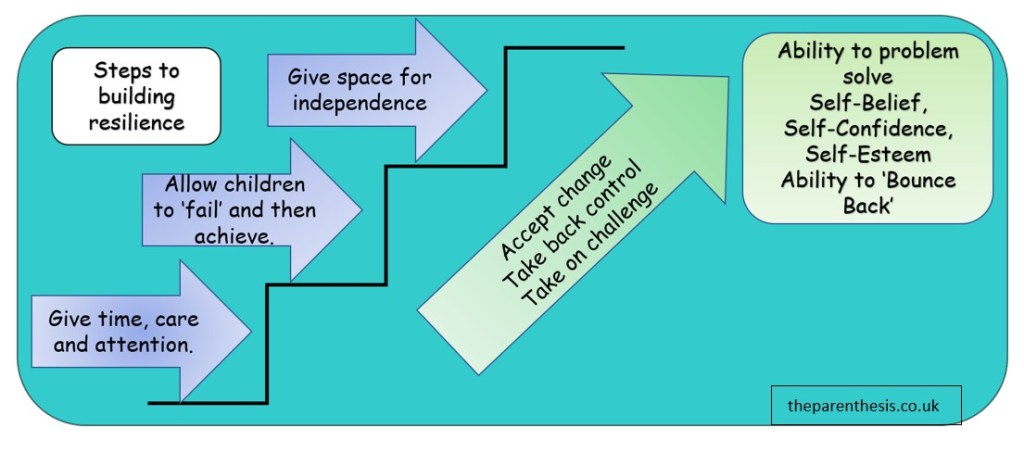
By taking these initial steps, we can give children the ability to problem solve and ‘bounce back’ from failure whilst building upon children’s self-Belief, Self-Confidence and Self-Esteem. We need to establish a culture in which resilience is not an unachievable myth for most children, but an accepted learning behaviour. The original Resilient Rhino was created to build learning power. The resilient element built on the emotional intelligence of the learning powered mind.
www.buildinglearningpower.com is a model which builds on the idea that learning is a learnable craft and by focussing on the strategic, cognitive, social and emotional aspects of learning, we can create adaptable and resilient learners.
The capabilities that underlie resilience can be strengthened at any age. The brain and other biological systems are most adaptable early in life. Yet while their development lays the foundation for a wide range of resilient behaviors, it is never too late to build resilience. Resilience (harvard.edu)
In the post-pandemic era where children have learned that any illness is a natural disaster and that failure is a total crisis, we need to bring back the values of Resilient Rhino and focus on building emotional strength, perseverance and motivate children to accept challenge thereby embedding the value in trying, trying and trying again.
 Bring colour to a monochrome journey
Leave a comment